
Stainless Steel Static Mixers: 316 Guide to Sizes & Service
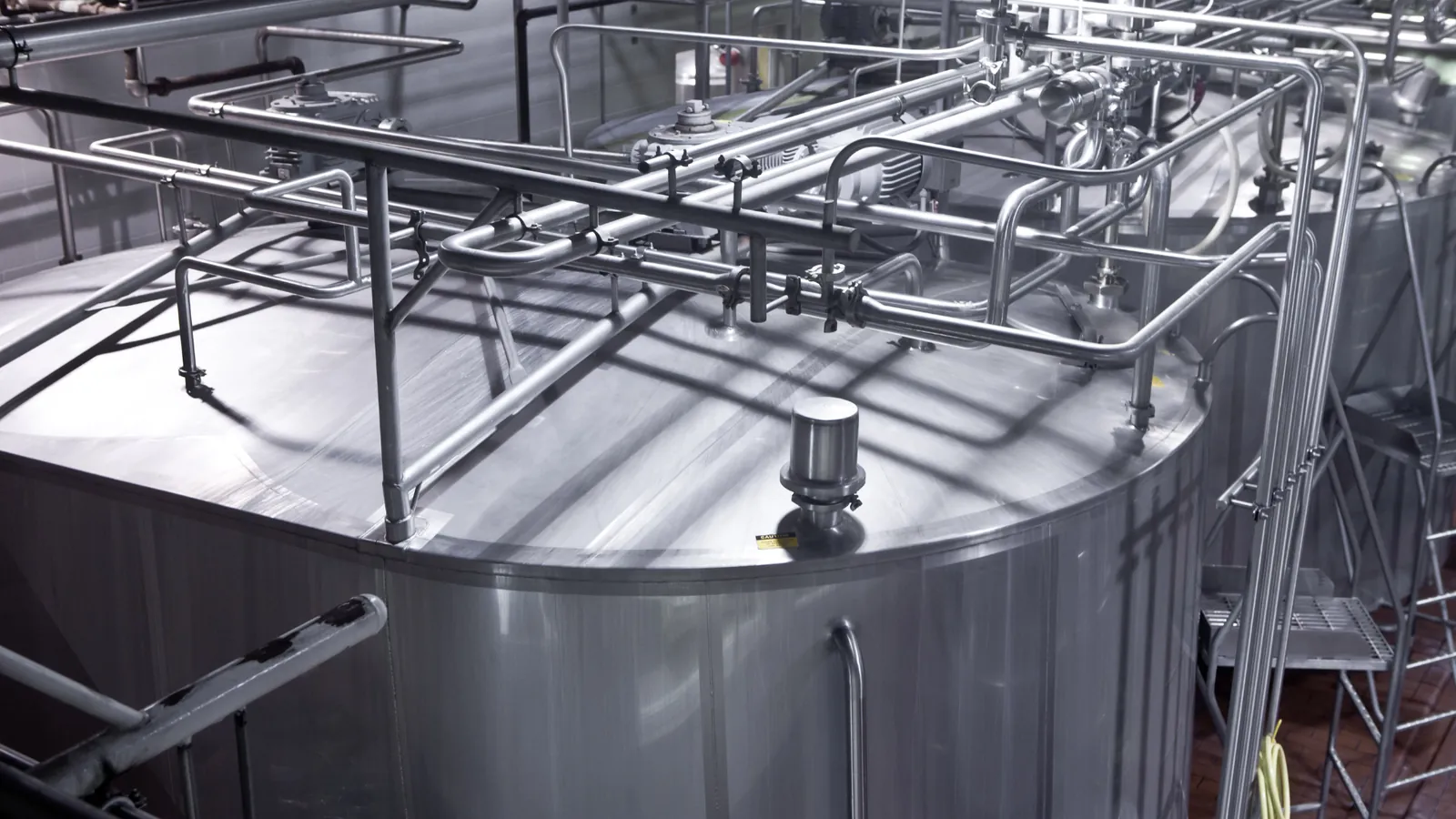
Table of Contents
KEY TAKEAWAYS
- 316 SS static mixers handle what plastics can't: high pressure (>10 bar), high temperature, aggressive chemicals, and sanitary/CIP service.
- Available 1/2" to 8"+, threaded or flanged, in blade or helical element designs .
- Sanitary/hygienic 316 SS is the food & pharma standard — CIP-cleanable, polished finish.
- 316 SS resists chlorides better than 304 — the right call for seawater, brine, and chlorine service.
- Higher first cost than PVC — justified by pressure/temp/chemical duty, not by water dosing.
1. When to Choose Stainless
| Service | Choose 316 SS because |
|---|---|
| High pressure (>10 bar) | Plastic ratings exceeded |
| High temperature (>60°C) | Plastic temp limits exceeded |
| Corrosive chemicals | Broad chemical resistance |
| Sanitary/food/pharma | CIP-cleanable, polished |
| Seawater/brine | Chloride resistance |
2. Sizes & Configurations
| Parameter | Range |
|---|---|
| Sizes | 1/2" – 8"+ (larger on request) |
| Material | 316 SS standard, 304/316L options |
| Ends | Threaded (NPT/BSPT), flanged, plain |
| Elements | Blade (turbulent), Helical (viscous) |
| Finish | Standard, polished (sanitary) |
| Certifications | ISO, NSF (potable), 3A (sanitary) |
3. 316 vs 304: Why It Matters
| Property | 304 SS | 316 SS |
|---|---|---|
| Chloride resistance | Moderate | Better (molybdenum) |
| Seawater/brine | Not recommended | Suitable |
| Chemical resistance | Good | Better |
| Cost | Lower | Higher (~15-25%) |
| Typical use | General process | Corrosive, marine, sanitary |
4. Sanitary/Hygienic Configurations
For food, beverage, and pharmaceutical lines:
- Polished internal finish — no crevices for bacterial growth
- CIP (clean-in-place) compatibility — survives caustic/acid wash cycles
- Tri-clamp or sanitary flanges — quick disassembly
- 316L preferred for weldability and corrosion resistance
5. Applications
| Industry | Duty |
|---|---|
| Chemical plants | Corrosive dosing, reactor feed blending |
| Water/wastewater | Hypochlorite, aggressive coagulants |
| Oil & gas | Inhibitor injection, high-pressure |
| Food & beverage | CIP chemical mixing, flavor/color |
| Pharma | Sanitary blending, aseptic lines |
| Marine | Seawater treatment |
6. Selection Checklist
- Pressure & temp — confirm 316 SS required vs plastic.
- Size & schedule — match line.
- Material grade — 316 vs 316L (welded/sanitary).
- Elements — blade/helical.
- Ends — threaded/flanged/tri-clamp.
- Finish — standard or polished.
7. FAQ
Q: Is 316 SS worth the cost over PVC? Only if your duty needs it — high pressure, high temp, aggressive chemistry, or sanitary. For water dosing, PVC/NSF 61 is the economic choice.
Q: Can I use 316 SS for seawater? Yes — 316's molybdenum content resists chlorides better than 304; it's the standard for marine service.
Q: Do you offer sanitary/tri-clamp mixers? Yes — polished 316L with tri-clamp connections for food/pharma lines.
Q: What certifications ship with the mixer? Material certificates, ISO, and NSF/3A where applicable — confirm at quoting.
Your Action Roadmap
- Confirm the duty — pressure, temp, chemistry, sanitary?
- Pick grade — 316 vs 316L.
- Choose elements & ends.
- Get a quote — with material certs.
→ Send us your duty spec for a 316 SS recommendation — typically answered within 24 hours.
NEXT STEP
Need a Static Mixer Sized for Your Line?
Send us your requirements — our team responds within 24 hours with pricing and lead time.
Written by
Ray ChanStatic Mixer Sourcing Specialist. Ray helps global importers and plant engineers source reliable inline mixing products.