
Static Mixers for Coagulation & Flocculation: Flash Mixing Guide
Table of Contents
KEY TAKEAWAYS
- Flash mixing is the critical first step — coagulant (alum, ferric, PAC) must disperse in < 1 second or floc quality suffers permanently.
- The mixing intensity target is the velocity gradient G = 300–1000 s⁻¹ for coagulation; flocculation runs gentler at G = 20–80 s⁻¹ .
- CoV < 0.05 is the dispersion target — static mixers hit it inline where mechanical flash mixers often don't.
- Poor flash mixing costs chemical overfeed (5-20%) and worse turbidity — both measurable plant KPIs .
- Retrofit-friendly: replaces the mechanical flash mixer in the discharge line, ΔP 0.3–1.0 bar.
1. Coagulation: Why the First Second Wins
When coagulant hits raw water, it must disperse instantly and uniformly. Slow or uneven dispersion means:
- Some water gets excess coagulant → wasted chemical
- Some water gets too little → turbidity breakthrough
- Flocs form at different times → inconsistent settling
The static mixer fix: inline flash mixing at the coagulant injection point, < 1 second, CoV < 0.05. This is the classic static mixer water-treatment duty.
2. G-Factor Targets
| Stage | G (s⁻¹) | Mixer type |
|---|---|---|
| Flash mixing (coagulation) | 300 – 1000 | Static mixer, 6 elements |
| Flocculation | 20 – 80 | Tanks/pipes (low shear) |
Design note: The static mixer handles the flash stage (high G); floc growth then happens in downstream tanks or pipes at low G. Don't try to flocculate inside the mixer — that requires long residence and low shear, the opposite of flash mixing.
3. Coagulant Types & Materials
| Coagulant | Typical dose | Material |
|---|---|---|
| Alum (aluminum sulfate) | 10–100 mg/L | PVC / PP |
| Ferric chloride | 5–50 mg/L | PP (aggressive) |
| PAC (polyaluminum chloride) | 5–50 mg/L | PVC / PP |
| Cationic polymer (primary) | 1–10 mg/L | PP |
Material rule: ferric and other acidic coagulants → PP; standard alum/PAC → PVC (NSF 61 for potable).
4. The Mixer Configuration
| Element | Recommended |
|---|---|
| Element type | Blade (turbulent water flow) |
| Count | 6 elements (CoV < 0.05) |
| Injection | Integrated injection port (coagulant enters mixing zone) |
| Position | Immediately downstream of chemical injection point |
| ΔP | 0.3–1.0 bar |
5. Retrofitting From Mechanical Flash Mixers
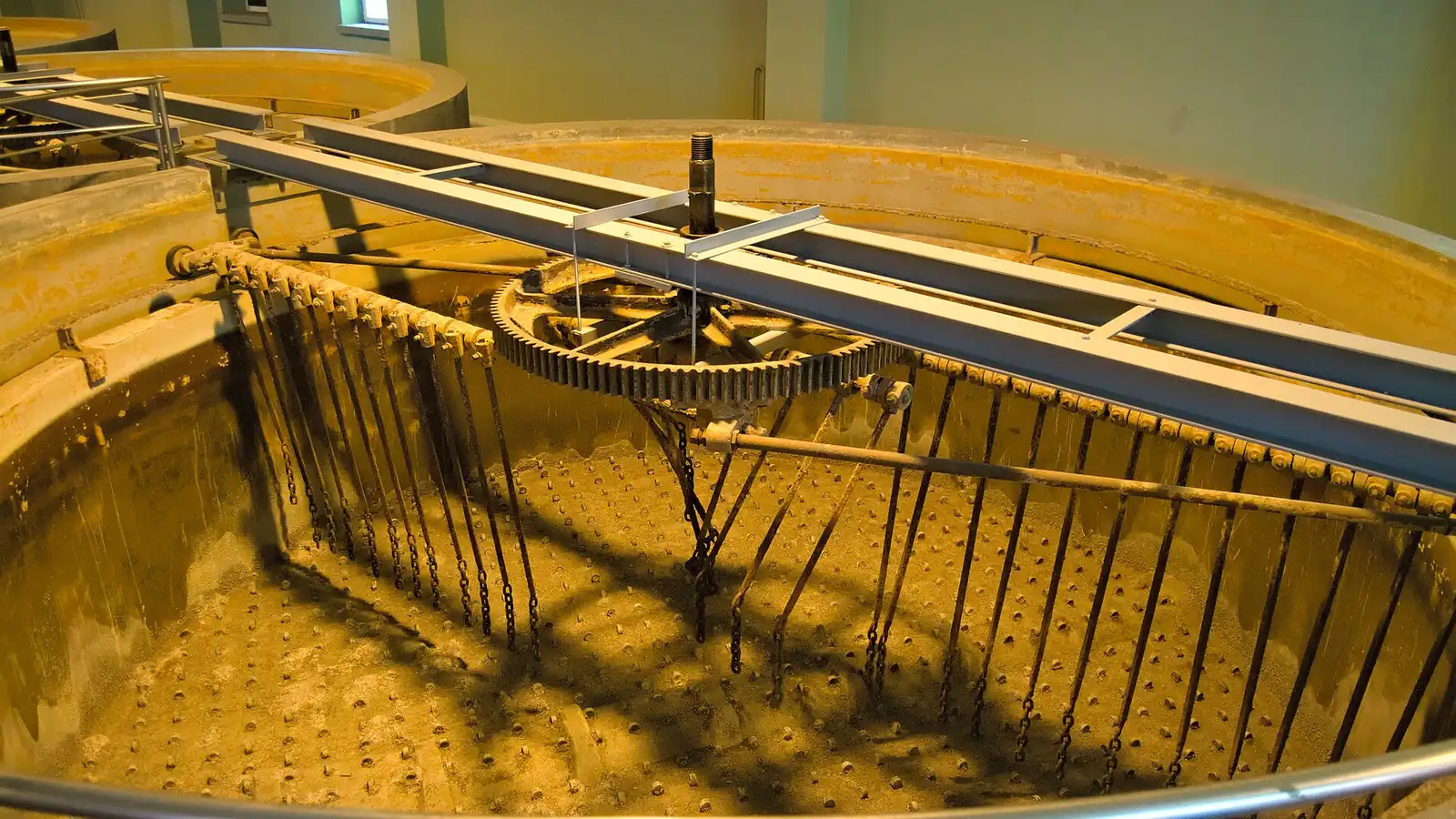
Many plants still use motor-driven flash mixers. The retrofit case:
| Factor | Mechanical | Static mixer |
|---|---|---|
| Mixing time | 10–60 s | < 1 s |
| Moving parts | Motor/impeller/seals | None |
| Maintenance | Schedule | Zero |
| Energy | Motor kW | Pump head only |
| Space | Tank + footprint | Inline |
Retrofit path: install the static mixer in the discharge line, verify ΔP vs pump, decommission the mechanical mixer. Most plants see equal-or-better CoV at lower operating cost.
6. FAQ
Q: Can a static mixer replace my flash mixer? Yes — for inline continuous coagulant dosing, it's the standard modern replacement. Verify ΔP and mixing time.
Q: Does mixing intensity matter after the coagulant is in? Yes but differently — flocculation needs gentle, long mixing. The static mixer does flash; downstream does floc.
Q: What material for ferric chloride? PP — ferric chloride is aggressive to PVC at working concentrations. Confirm with the compatibility table.
Q: Do you supply mixers with coagulant injection ports? Yes — NPT/flanged injection ports are standard options.
Your Action Roadmap
- Confirm your coagulant & dose — material follows chemistry.
- Target G and CoV — 300-1000 s⁻¹, < 0.05.
- Position the mixer — at the injection point.
- Get a quote — flash mixer replacement or new line.
→ Send us your plant duty spec for a flash mixing recommendation — typically answered within 24 hours.
NEXT STEP
Need a Static Mixer Sized for Your Line?
Send us your requirements — our team responds within 24 hours with pricing and lead time.
Written by
Ray ChanStatic Mixer Sourcing Specialist. Ray helps global importers and plant engineers source reliable inline mixing products.